Full Size (double zhen) – $500.00
Half Size (zhen) – $250.00
Half Size (zhen) – $250.00
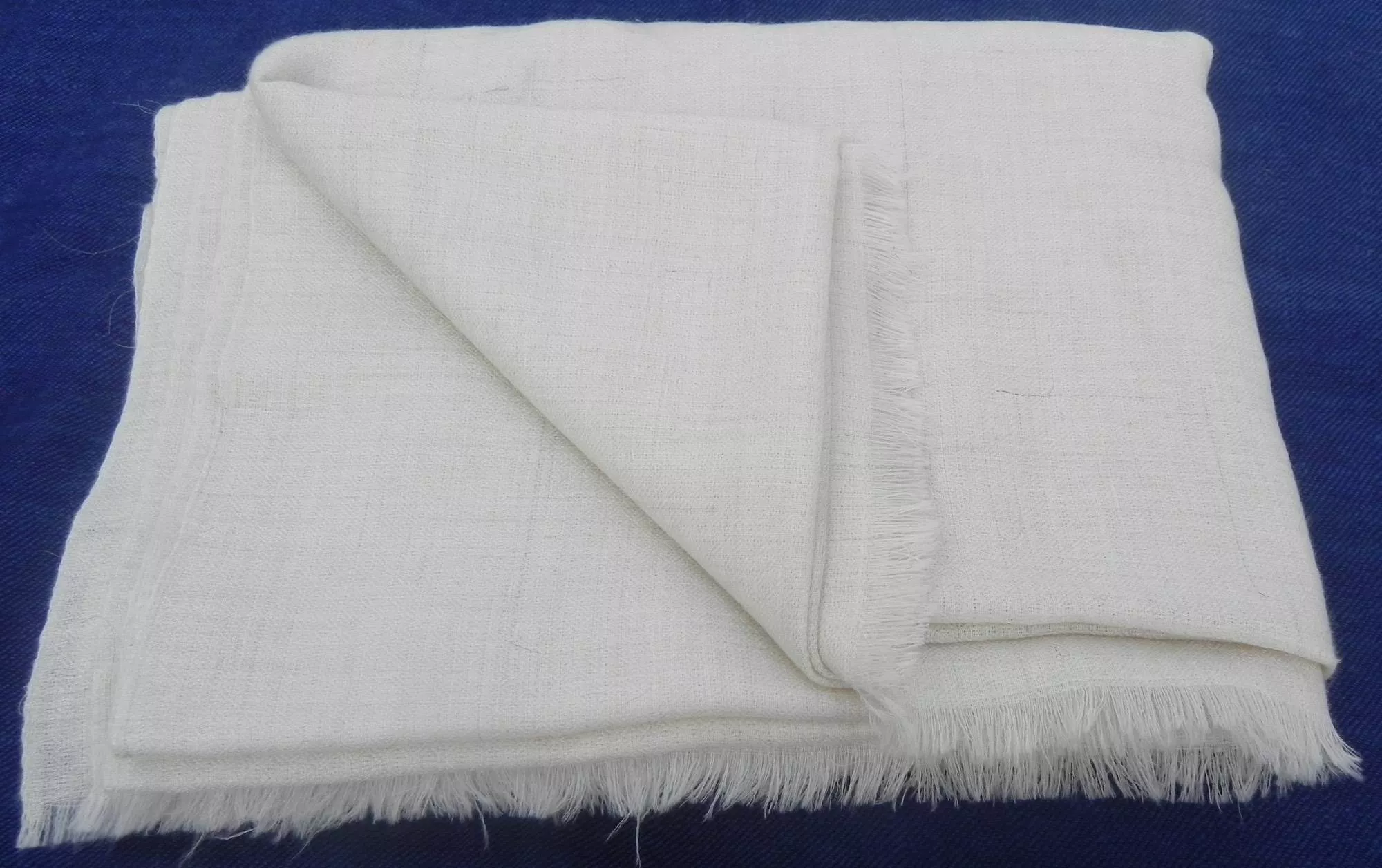
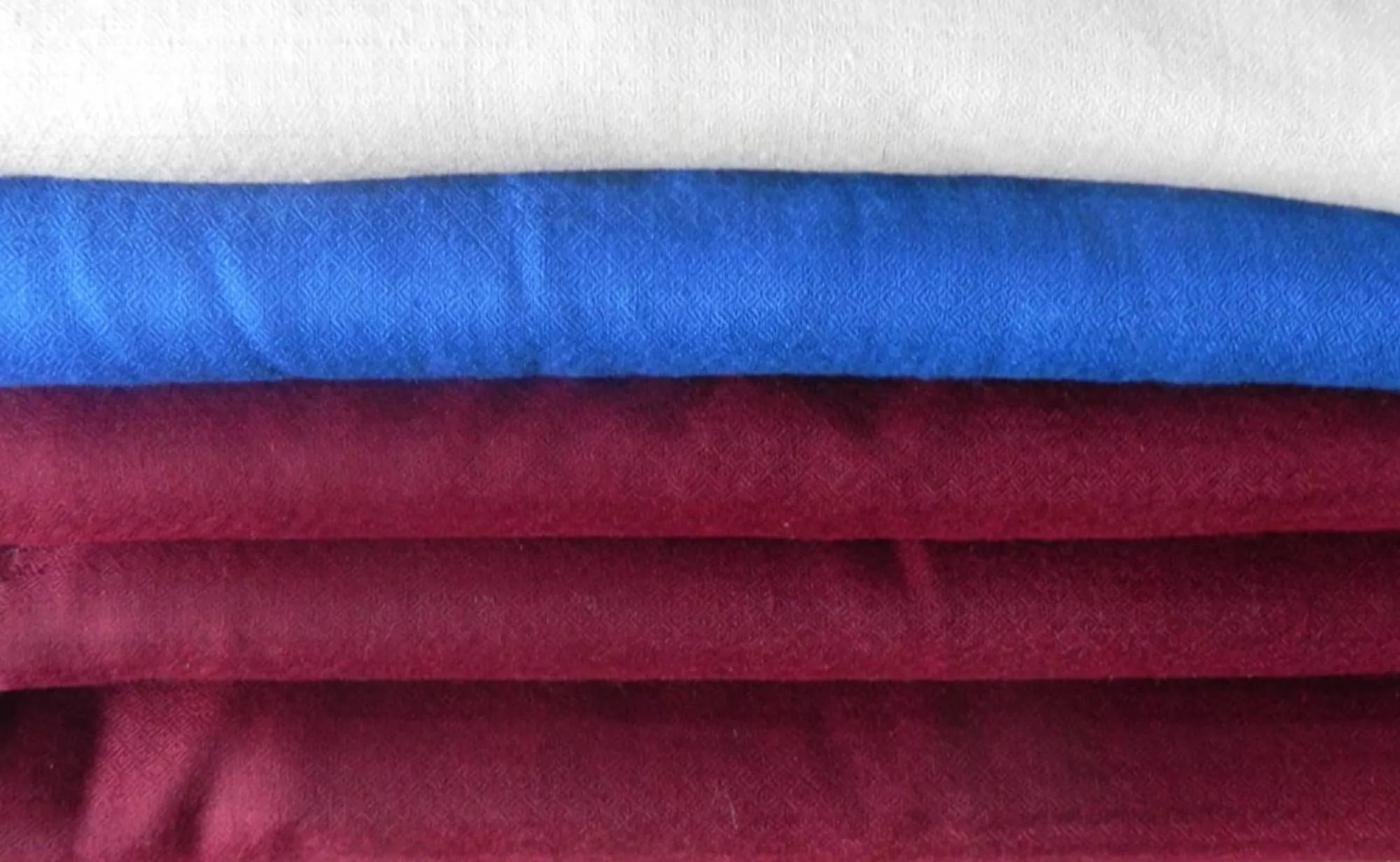
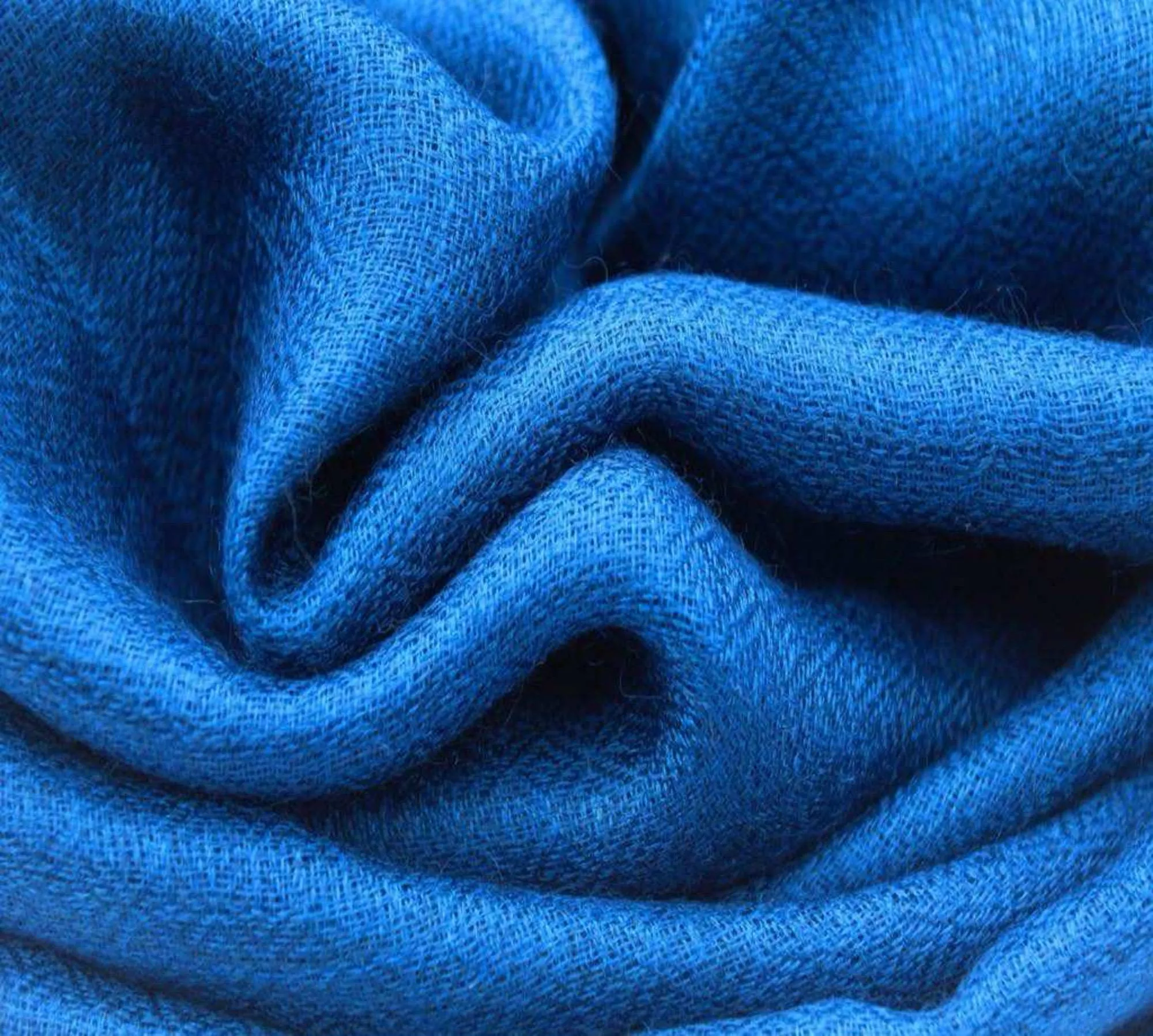
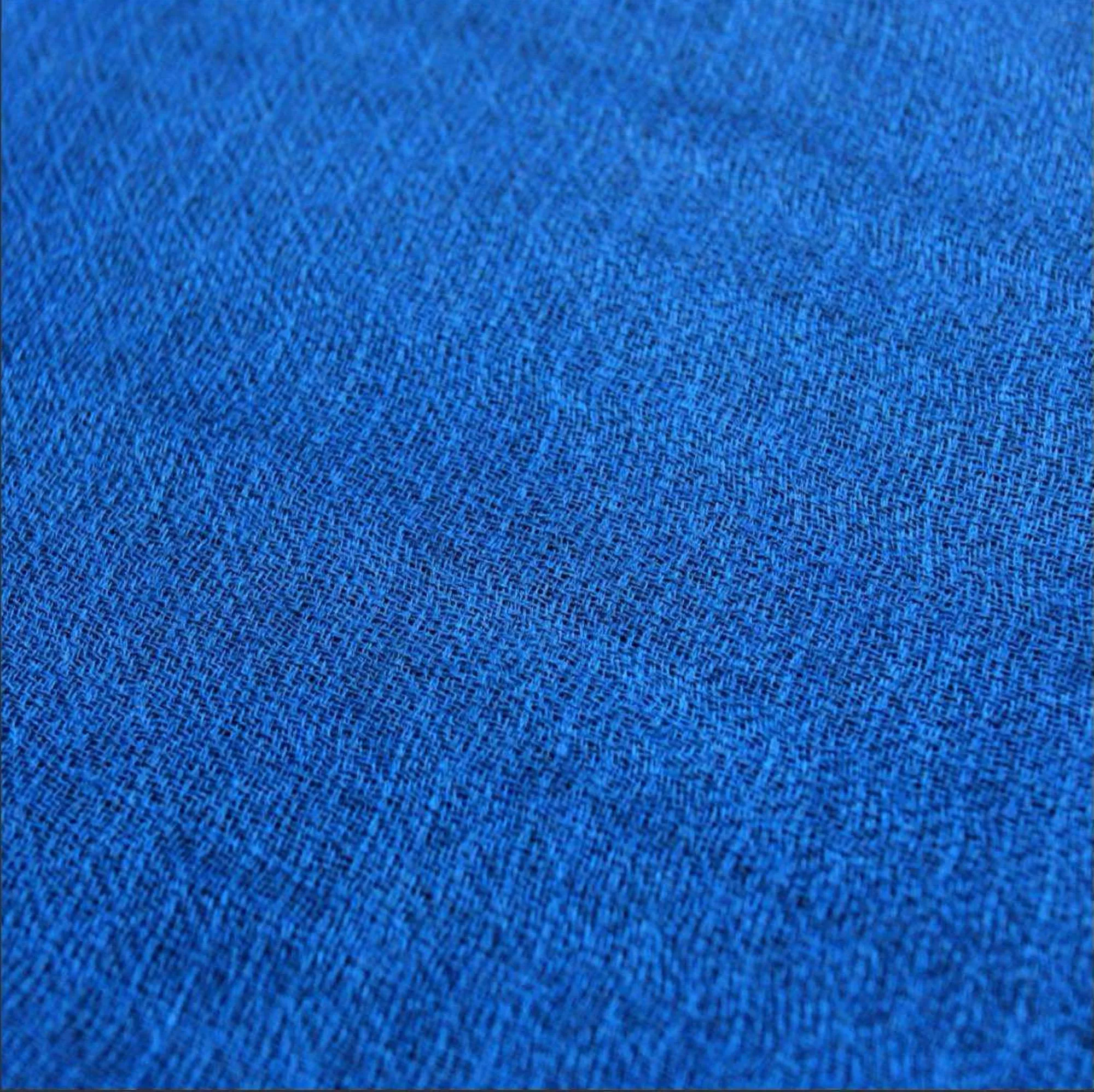
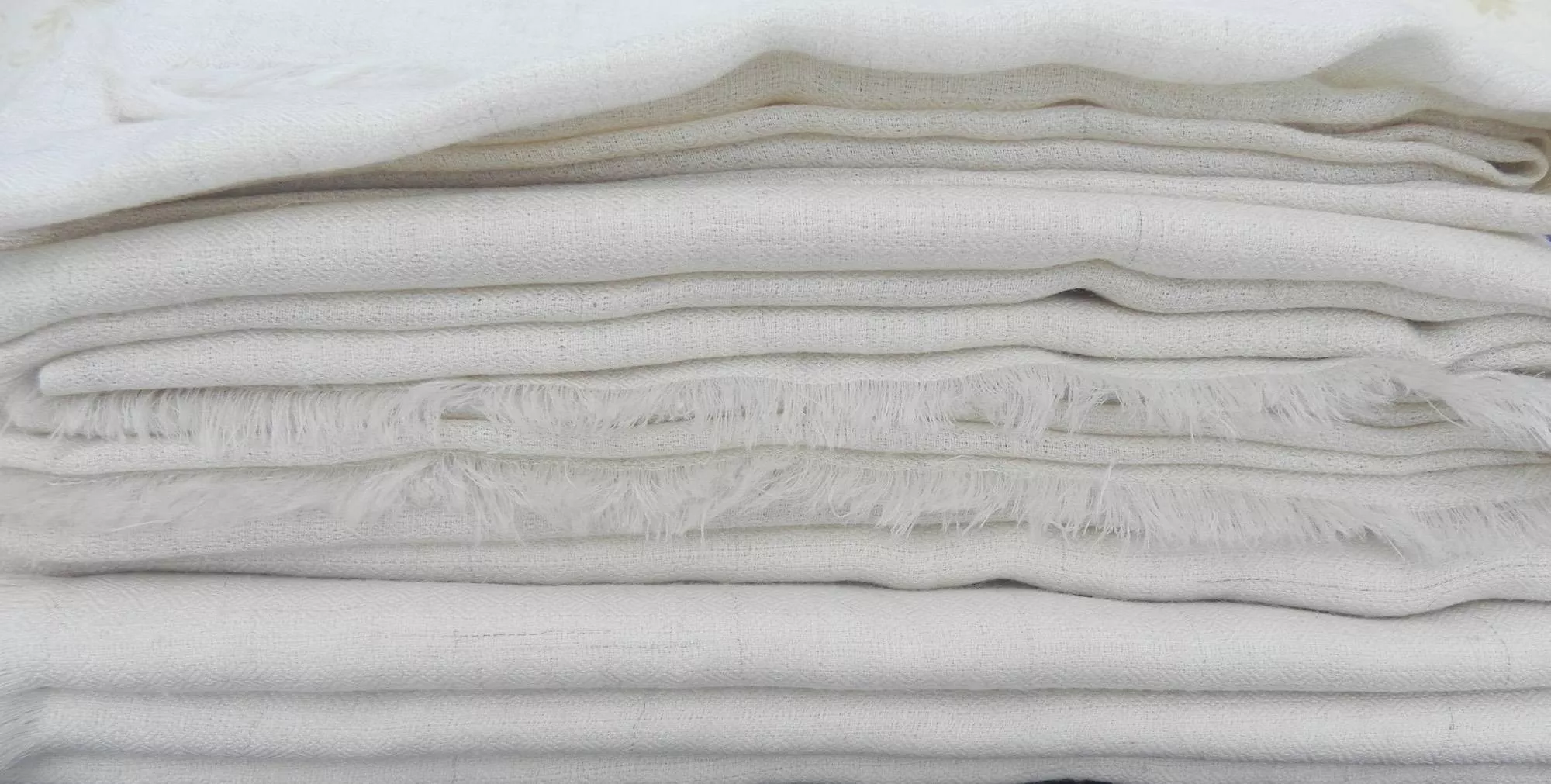
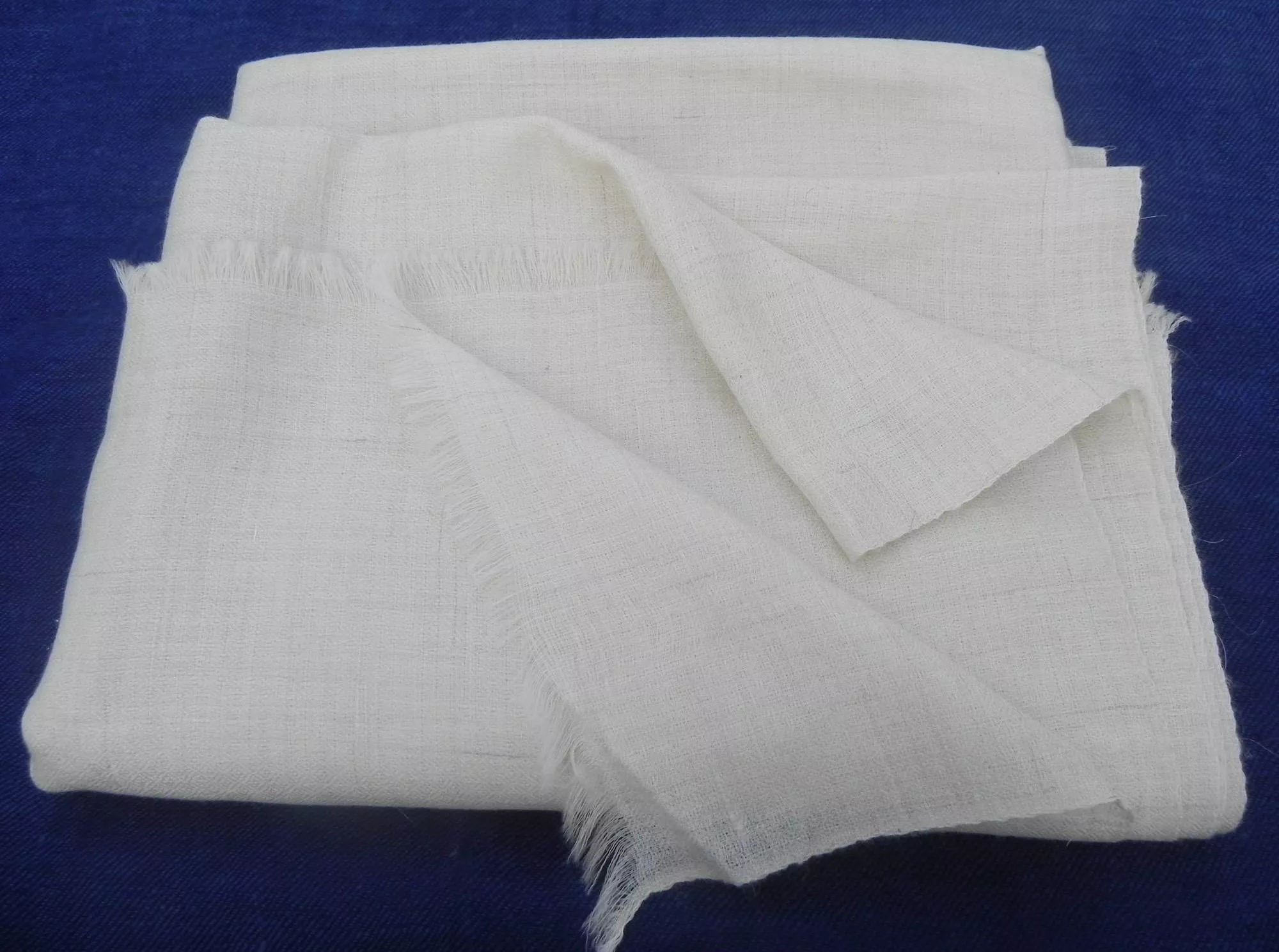

100% Certified Himalayan Pashmina. Made in Kashmir. Dyed to your tradition’s exact color. Shipped free directly from the workshop.
Ordering for a community, or need a custom format? Contact us directly.
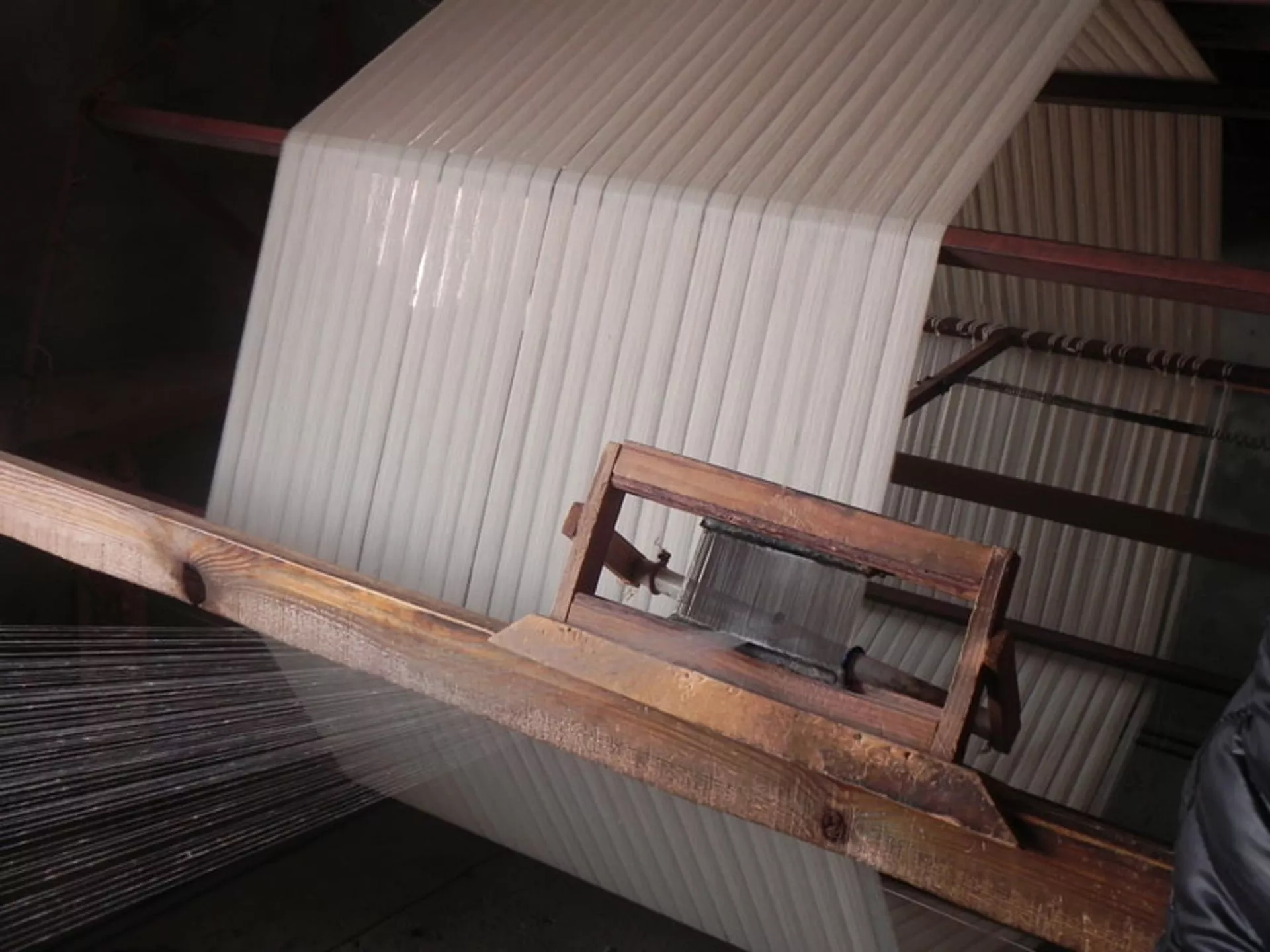
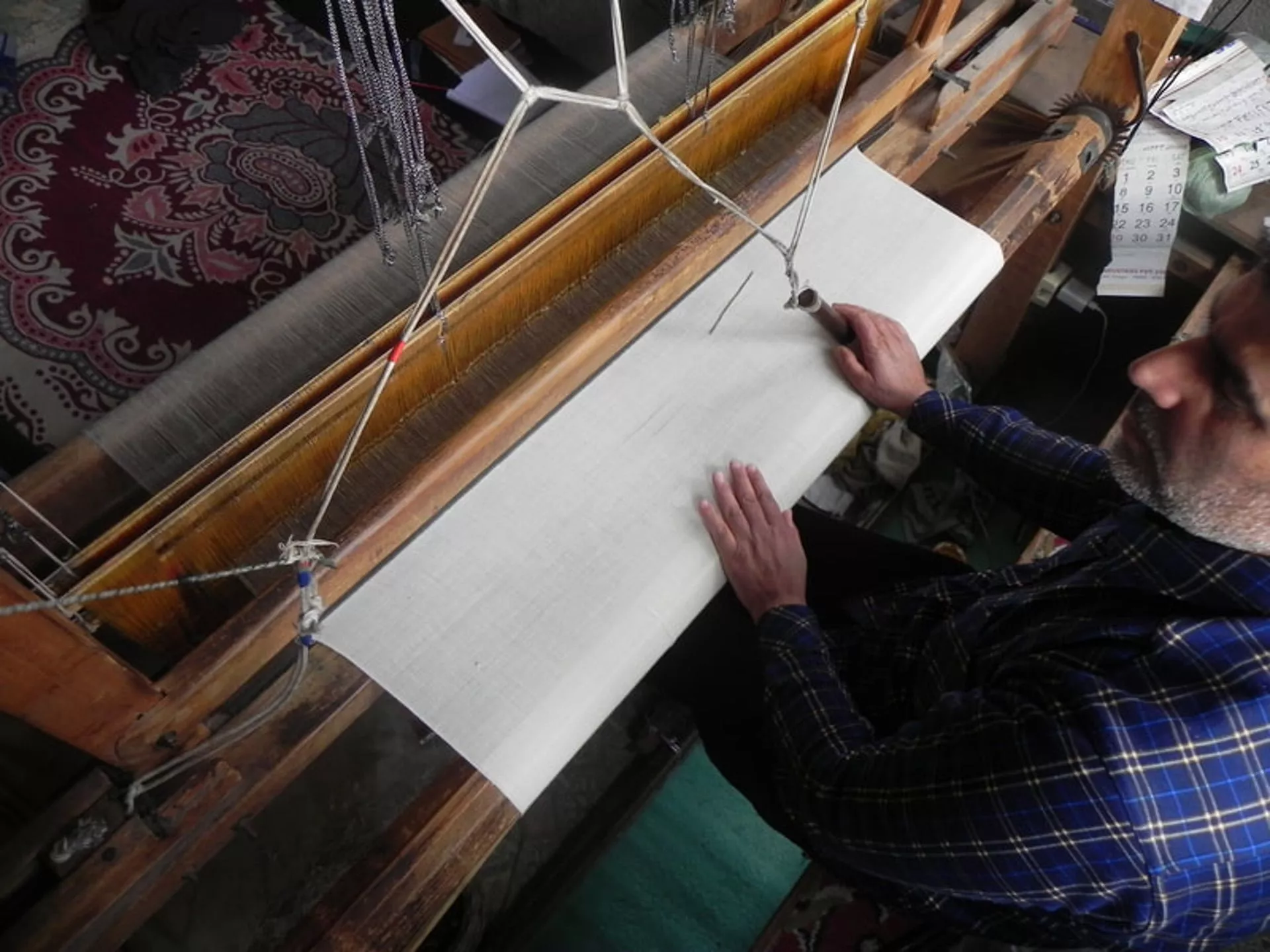
A master weaver spends 28 working days at the loom to produce a single five meter piece of pure Himalayan Pashmina cloth. Progress advances slowly as each thread is pulled tight to compress the weave to a density that a faster pace cannot produce. This tight weave is the construction decision that sets this robe apart.
The cloth this method produces is dense without being thick – warm without bulk, structured without stiffness, fine without being fragile. While at first glance a robe like any other, what Pashmina fiber in a tight weave produces is a cloth that holds its appearance, its warmth, its feel across years of daily use.
Two formats are available. The Full Size is the equivalent of two zhen joined at the shorter edge into a single five meter piece of cloth, worn folded at the midpoint to create two full layers of Pashmina across the body. The Half Size is one zhen, worn as a single layer.
Every robe is commissioned to order in Kashmir – hand-loomed, dyed to your tradition’s exact color specification, and independently certified 100% pure Himalayan Pashmina before it leaves the workshop. The Order & Shipping tab below shows exactly what that commission looks like from confirmation to dispatch.
For non-standard dimensions, children’s sizes, and community orders, contact us directly.
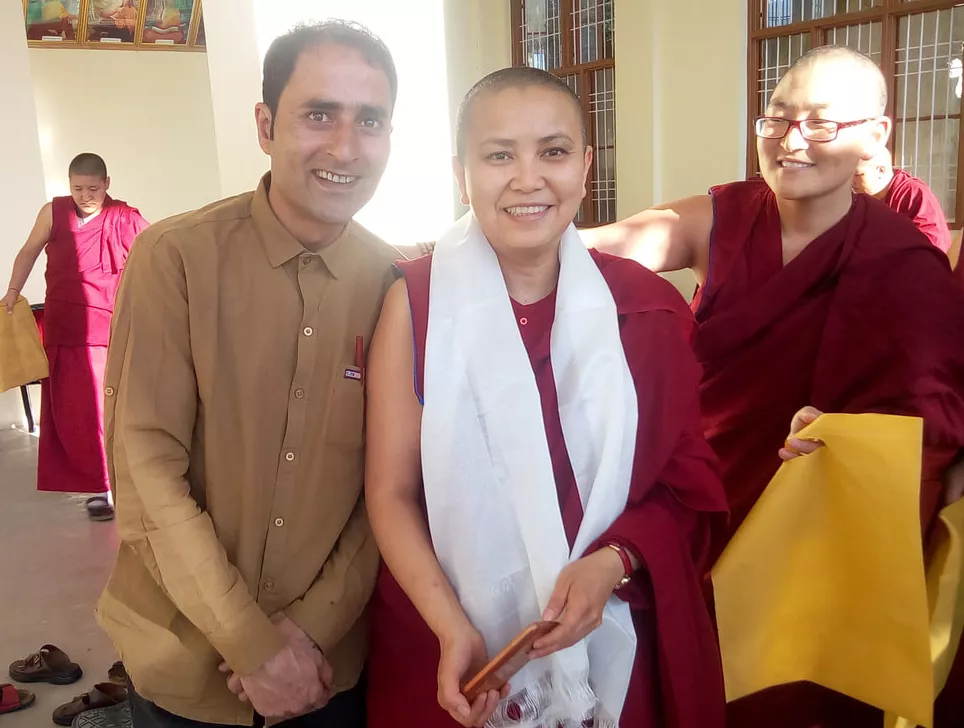
In 2016, the first group of Tibetan nuns completed the Geshema examination – the doctoral qualification of the Gelug tradition, requiring nearly two decades of study and practice. No women had earned this qualification before. His Holiness the Dalai Lama and the monks of Namgyal Monastery in Dharamsala sought an offering fitting to the occasion.
A nun was dispatched to Temple Road in Dharamsala to identify a source who could supply a large order of authentic Pashmina scarves dyed to monastic maroon. She entered Hilal Goona’s shop. The search was for zhen sized shawls, but Hilal had some years earlier produced a single Pashmina monastic robe on commission for a private donor making an offering to His Holiness. He suggested that a full robe could again be made, and she returned to her teachers with a sample shawl and the proposal of a full hand-loomed 5 meter Pashmina robe.
The Namgyal Lamas ordered several robes for consideration. Hilal oversaw the production through his workshop network in Srinagar. The cloth required a tight weave – the density that gives Pashmina the durability daily monastic wear demands. The test robes were reviewed. On the strength of those results, the commission was placed. His Holiness the Dalai Lama would offer these robes to the Geshemas.
Only later did Hilal come to understand the full weight of what that offering had honored. The first act of robe offering in the Buddhist tradition was performed by Mahāpajāpatī Gotamī, the Buddha’s aunt and the first nun, who offered the Buddha a robe she had woven herself. That the first offering in the tradition was made by the first nun, and that His Holiness’s offering – twenty-six centuries later – was made to the first women to complete the Geshema qualification, is a resonance of the tradition upon itself.
Word spread quickly. Monks and nuns came to Hilal’s shop to see the robes. For most, the price put them out of reach – a robe of this specification costs ten times what a standard wool robe costs, and those who have renounced material accumulation do not spend at that level. After seeing this play out many times, Hilal realized the answer was already present in the act that had brought the robe into existence. His Holiness the Dalai Lama had offered these robes. That was the model.
He also saw something else. Authentic hand-loomed Pashmina in the sizes committed practitioners require did not exist in the market. Not robes. Not the practice shawls long term meditators sit in for years. Not scarves whose fiber could be trusted. The demand was real. The supply, anywhere in the world, was not. He established Cīvara Workshop in Srinagar to close that gap – producing the full range of Pashmina textiles practitioners need, authenticated from fiber to finished piece.
The robe His Holiness offered to the Geshemas is the origin of this workshop and everything it produces. It set the standard. Everything made here results from that example.
Wool is permitted by the Vinaya – kambala, explicitly authorized for communities in cold climates.
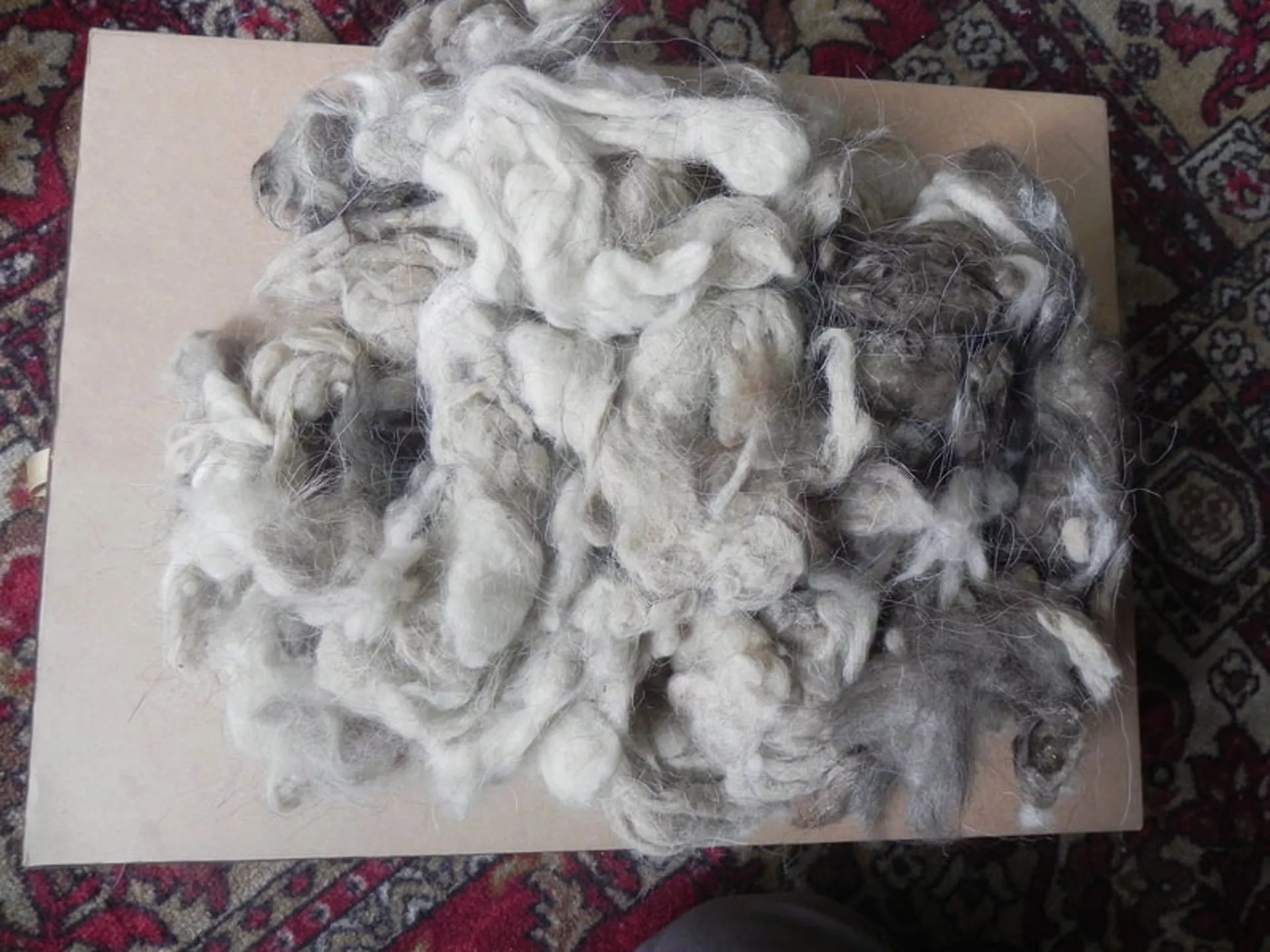
Pashmina is wool from a specific source: the undercoat of Changthangi goats on the Ladakh plateau, combed during the natural shedding season. The individual fibers run 12 to 16 microns – roughly one fifth the diameter of a human hair – making it the finest wool produced in the Himalayan region.
The fiber is combed, not shorn. No harm to the animal is required to collect it.
The craft Hilal grew up inside – hand-loomed, pure Himalayan fiber, produced by craftspeople who had worked it their entire lives – was progressively displaced by mass-produced product carrying the same name. For anyone buying outside Kashmir, distinguishing genuine Pashmina from what the market calls Pashmina became nearly impossible.
This is one of the primary reasons this workshop exists. Hilal understood that anyone seeking genuine Pashmina textiles in practitioner oriented sizes has almost no reliable way to source them. Independent laboratory certification – verifying 100% pure Himalayan Pashmina content – is the workshop’s answer to that problem.
Every item is tested by the Pashmina Testing and Quality Certification Centre at the Craft Development Institute in Srinagar – the government laboratory established in 2013 to implement the GI Act for Kashmir Pashmina. Testing occurs after weaving and dyeing are complete. Each finished item is submitted individually.
The laboratory verifies fiber origin by scale morphology under the microscope, measures average fiber diameter within the Pashmina range, confirms 100% Pashmina content against adulterants, and documents the construction – machine-spun yarn, hand-loomed cloth. The certificate issued for each item carries these findings, its physical specifications, a unique identifier, and a photograph of the exact item tested.
This workshop does not carry the Kashmir Pashmina GI tag. The GI tag requires hand-spun yarn in addition to hand-loomed cloth – a production method that would more than double the production cost of each item and place our robes even further outside the reach of the monastics they are made for. The cloth is hand-loomed. The yarn is machine-spun. The fiber is authenticated independently.
Not a claim. A test result.
The Pāli Vinaya specifies six permitted robe materials – khoma (linen), kappāsika (cotton), koseyya (silk), kambala (wool), sāṇa (coarse hemp), and bhaṅga (canvas). Wool is permitted without qualification.
“O monks, I allow six kinds of robe-materials: linen, cotton, silk, wool, coarse hempen cloth, canvas.” Mahāvagga, Khandhaka 2 (Vin.I.58)
On the question of receiving a fine robe from a lay donor, the authorization is equally direct. When the physician Jīvaka Komārabhacca requested that the Buddha permit monks to accept householders’ robes, the Buddha authorized it:
“I allow you, O monks, householders’ robes. Whoever wishes may be a rag-robe wearer; whoever wishes may consent to householders’ robes.” Mahāvagga, Khandhaka 8 (Vin.I.281)
The standard is contentment, not austerity for its own sake. A robe of fine wool, cut and dyed as the tradition requires, accepted with equanimity, is entirely consistent with the Vinaya. The spiritual quality of the act lies in the intention – of giver and receiver – not in the fiber.
“Monks, I allow him who consents to householders’ robes to consent also to rag-robes. And I commend satisfaction with both.” Mahāvagga, Khandhaka 8 (Vin.I.288)
These citations are from the Pāli Vinaya, accepted across Theravāda, Tibetan, and Mahāyāna lineages as foundational. Monastics should consult their own Vinaya teacher or abbot for guidance specific to their ordination.
A tight weave advances slowly. Each pass of the shuttle and each draw of the comb pulls the fibers to a density that compresses the progress forward. A looser weave covers the same distance faster – fewer passes, less material, less resistance. The 28 days on the loom this robe requires is not a pace. It is what the construction requires. It cannot be rushed and yield the same result.
A tight weave uses more fiber per square centimeter. The individual strands sit closer together, interlocking with a density that the standard loose weave does not produce. This is the construction decision this monastic robe is built on – chosen because a robe worn every day, folded and washed across years of use, requires a cloth built to hold.
What this precision produces is a cloth that is dense without being thick. At first glance it appears a robe like any other. In use – the weight across the shoulders, the warmth it holds, its feel, the way it continues to hold these after years of daily wear and washing – it conveys qualities the eye alone does not reveal.
Each robe is dyed to your tradition’s exact color specification before it leaves the workshop.
Colors are organized by tradition in the selector above. Select your tradition to see the standard palette for that lineage. Each color in the list corresponds to a specific Pantone reference, matched by a specialist dye laboratory in Srinagar to exact specification.
If your tradition is not listed, or if you require a specific shade your monastery or teacher uses, select ‘Specify Custom Color’. You can then provide a hex code or Pantone reference, or send a photograph of a robe in the correct color. We will confirm the exact shade with you before dyeing begins.
Two standard formats are available.
The Full Robe – 500cm x 100cm, 400g – is the equivalent of two zhen joined on a short edge into a single 5 meter piece of cloth. Worn folded at the midpoint, it creates two full layers of pure Pashmina across the body. 28 days on the loom, 5-7 days for dyeing and certification, then dispatch.
The Half Robe – 250cm x 100cm, 200g – is the standard zhen size, worn as a single layer. 14 days on the loom, 5-7 days dyeing and certification, then dispatch.
For robes outside these dimensions – including children’s sizes, non-standard body dimensions, or tradition-specific construction requirements – contact us directly. Community and institutional orders are welcome.
Across Srinagar, master weavers work in their own households – each one a craftsperson who has worked pashmina since childhood. Cīvara Workshop engages this network against a single specification, held and enforced by Hilal Goona.
Hilal holds the standard and assigns the weaving, dyeing, and finishing to the households in his network that hold each specialty. Every cīvara – robe, shawl, or scarf – passes through his personal oversight before it is submitted for laboratory certification. He packs and dispatches every order himself.
Whether the order is one or one hundred, the construction is the same. The capacity comes from the network. The standard comes from Hilal.
Hilal Goona is the craftsman at the center of this network. He was born into a Pashmina household in Dal Gate, Srinagar. His earliest knowledge of the fiber came from his grandmother and from journeys as a child with his uncles to collect raw pashm from the Changpa shepherds of Ladakh and Zanskar. He has worked this craft, and shipped its products to buyers across the world, for thirty years. The standard he holds this network to is not a specification he adopted. It is one he grew up inside.
Every piece produced by the workshop passes through his hands before it leaves Srinagar. He inspects the weave, the dye, and the finish. If a piece does not meet the construction standard, it does not proceed to laboratory certification. If it does not pass certification, it is not dispatched.
Hilal packs and ships every order himself. If you have a question or concern at any point – before, during, or after your order – you are contacting him directly.
Every robe is made for the person who ordered it. There is no warehouse. There is no stock of finished robes waiting to be dispatched.
When your order is confirmed, a weaver is assigned. The work begins immediately and runs without interruption – 28 days for the Full Size, 14 days for the Half Size. A further 5-7 days for dyeing and certification, then dispatch.
This is not a delay. One person, working full time, for nearly a month, produces one robe. That is what the object is.
You will receive updates at each stage by WhatsApp or email – including photographs when your robe reaches the loom and at the halfway point, and an image of the certification document when complete. Your final update will include the shipper’s tracking number.
Worldwide delivery is included at no additional cost.
From dispatch in Srinagar, DTDC Express Premium delivers to most destinations in 5-10 business days depending on region, with real-time tracking and full declared value insurance from the moment it leaves the workshop.
Hilal has been shipping Pashmina internationally for thirty years. He knows the logistics, the customs requirements, and the carriers.
Hand wash with a gentle shampoo in cool water, or dry clean. Do not wring. Lay flat to dry away from direct heat or sun. Fold rather than hang for storage. Keep away from moths.
Accidents happen. Hilal has overseen the repair of several robes produced by this workshop and the results are usually not visible to the eye. A repaired robe is not a diminished robe.
If your robe is damaged, photograph the damage and contact us. Hilal will assess the photos and confirm what is repairable and at what cost before any commitment is made. If a repair plan is agreed upon, we will send a shipping label.
Holes and cuts can generally be repaired invisibly. Some stains can be treated. Burns cannot be repaired.
Turnaround from receipt at the workshop to return dispatch is confirmed at the time of the repair agreement.
When your order is confirmed, a weaver is assigned and the work begins immediately – 28 days for the Full Size, 14 days for the Half Size. A further 5-7 days for dyeing to your tradition’s exact color and laboratory certification, then dispatch. From dispatch, delivery to most destinations takes 5-10 business days. You will receive updates at each stage by WhatsApp or email – including photographs when your robe reaches the loom and at the halfway point, and an image of the certification document when complete. Your final update will include the shipper’s tracking number.
Yes. These are among our most regular destinations. Robes ship from Kashmir via DTDC with full tracking and insurance. For delivery to a monastery or nunnery, provide the full address including pin code and a contact phone number at checkout – both are required for reliable delivery in these regions. For community or institutional orders, contact us directly before placing your order.
Yes. At checkout provide the name, address, pin code, and phone number of the recipient and the robe will be shipped directly to them. For monastery or community offerings, contact us before ordering and we will confirm the best approach.
Select “Specify Custom Color” in the selector. You can provide a hex code or Pantone reference, or send a photograph of a robe in the correct color. The dye laboratory in Kashmir can match any specification. We will confirm the exact shade before dyeing begins.
Yes. Every robe carries independent laboratory certification verifying 100% pure Himalayan Pashmina content. Certification details are provided at dispatch.
Yes. Contact us with the required dimensions and tradition. Community and institutional orders are also welcome.
The quality of the white robes was beyond my expectations – soft, warm, and made with such care.
These robes are not just garments, they carry a blessing. Thank you for your generosity and craftsmanship.
Wearing this robe fills my heart with peace. It is truly special to receive something made with love.
I have known Hilal Goona for many years… Buying direct from him ensures genuine quality.